
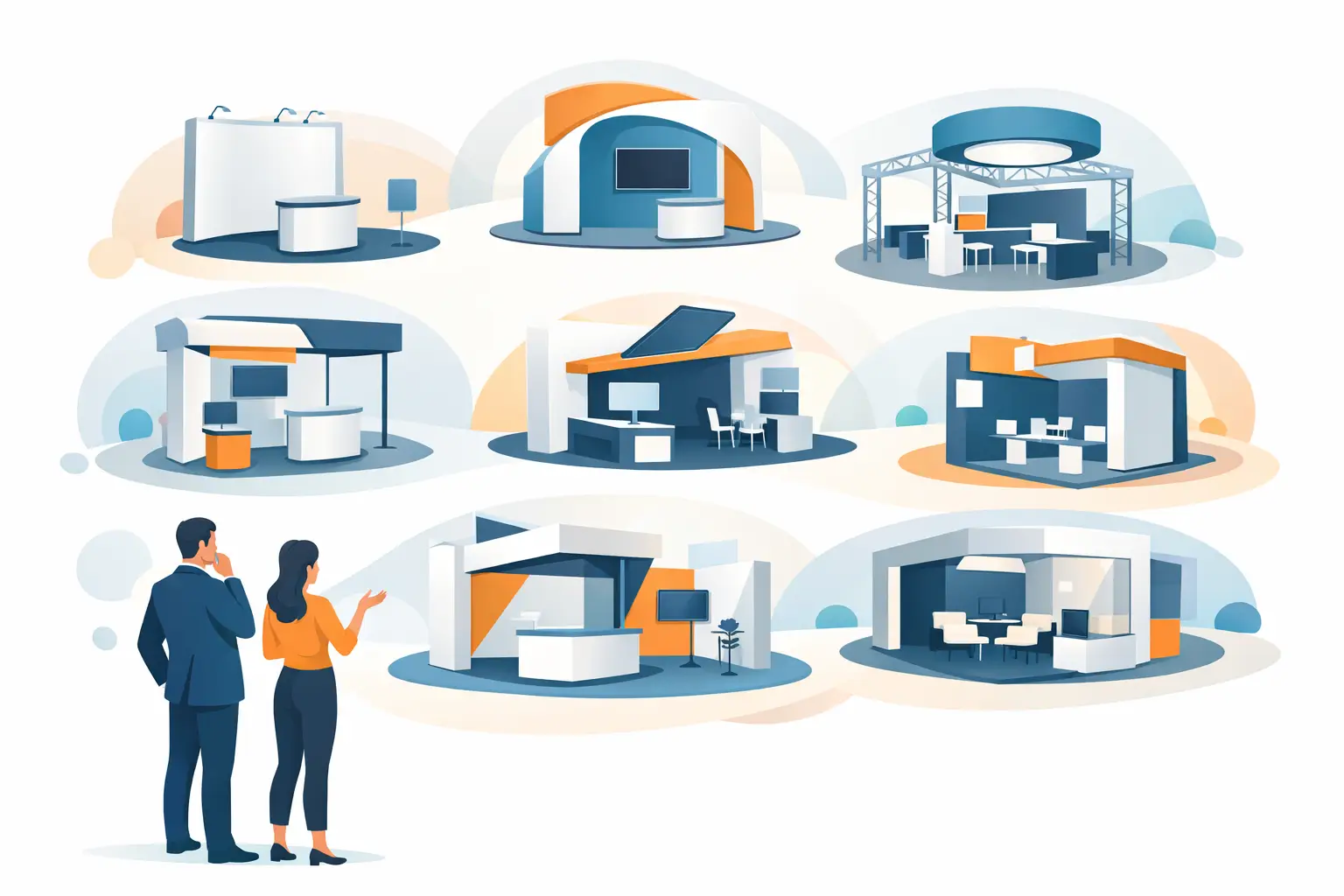
8 Types of Exhibition Stands Explained
A stand that looks impressive in a render can fail the moment it meets a real venue, a real audience, and a real event deadline. That is why choosing between different types of exhibition stands is not just a design decision. It is a commercial decision that affects visibility, footfall, brand perception, installation time, and overall event return.
For marketing leaders and event teams, the right stand should do more than fill a floor space. It should support how your brand wants to be seen, how your team needs to operate on-site, and what the event is meant to achieve. Some formats are built for speed and portability. Others are designed for scale, immersive engagement, and a stronger architectural presence. The best choice depends on your objectives, your budget, and how often you exhibit.
Why the types of exhibition stands matter
Not every exhibitor needs a large custom environment with integrated screens, meeting rooms, and feature lighting. In the same way, not every brand should rely on a simple modular setup if the event is strategically important and the competition on the floor is strong.
The stand format shapes first impressions. It influences how easily visitors can understand your offer, where conversations happen, and whether your presence feels premium, practical, or forgettable. In busy exhibition halls, small differences in structure, layout, and finish can have a measurable effect on engagement.
1. Shell scheme stands
A shell scheme stand is the standard booth framework provided by many exhibition organizers. It usually includes basic wall panels, fascia signage, lighting, and a defined floor area. For brands attending smaller trade shows or working within a controlled budget, this can be a practical starting point.
The advantage is simplicity. Logistics are easier, setup requirements are lighter, and there is less production complexity to manage. The trade-off is limitation. Because many exhibitors begin with the same structural base, differentiation depends heavily on graphics, lighting upgrades, furniture, product display, and clear brand presentation.
Shell scheme works best when the event itself drives targeted traffic and your goal is to establish presence efficiently rather than create a highly immersive environment.
2. Pop-up exhibition stands
Pop-up stands are lightweight, portable systems designed for speed and ease of use. They are commonly used for roadshows, internal events, smaller expos, and promotional activations where flexibility matters more than architectural scale.
This format is attractive for teams that exhibit frequently in different locations. It is easier to transport, faster to assemble, and generally more cost-effective over multiple uses. That said, pop-up systems can feel temporary if the visual design is weak or the surrounding event environment is more premium.
For brands that need dependable portability, pop-up stands are a strong option. For flagship industry events, they may need supporting elements such as counters, digital screens, product plinths, or branded backdrops to carry enough impact.
3. Modular exhibition stands
Modular stands sit in the middle ground between portability and customization. They use a flexible structural system that can be reconfigured across different stand sizes and floorplans, which makes them especially useful for businesses with an active event calendar.
Among the most practical types of exhibition stands, modular solutions offer strong long-term value. A well-designed system can be adapted for different venues while preserving brand consistency. This helps reduce waste, improve efficiency, and maintain a professional look across multiple exhibitions.
The key benefit is versatility, but that does not mean every modular stand looks distinctive by default. The quality of the creative direction matters. Materials, finishes, lighting, and graphic integration make the difference between a modular stand that feels polished and one that feels generic.
4. Custom-built exhibition stands
Custom-built stands are created specifically for a brand, an event objective, and a particular footprint. They offer the greatest freedom in layout, materials, visual storytelling, and visitor flow. If your priority is maximum impact, custom is often the strongest route.
This approach allows for tailored meeting spaces, product zones, hospitality areas, interactive displays, suspended branding, and standout architectural features. It also supports tighter alignment between physical space and brand identity. When executed properly, a custom stand does more than attract visitors. It reinforces market position.
The trade-off is higher investment and more detailed planning. Design development, technical approvals, fabrication, transport, and installation all require disciplined coordination. For major launches, category-leading brands, and high-stakes industry events, that investment is often justified.
5. Double-decker stands
Double-decker stands use two levels to expand usable space within the same footprint. They are especially effective at large exhibitions where floor space is expensive and where private meeting capacity is essential.
The upper level can be used for executive meetings, hospitality, or quieter conversations away from the public zone below. The lower level remains focused on visibility, product display, and visitor engagement. This creates a strong balance between open brand presence and controlled business interaction.
Not every event permits this format, and venue regulations are stricter. Structural engineering, approval processes, and safety requirements must be managed precisely. When suitable, however, a double-decker stand can create a commanding presence that signals confidence and scale.
6. Island stands
An island stand is open on all sides, giving visitors access from every direction. This format offers excellent visibility and is often used by brands that want a central, high-traffic presence on the exhibition floor.
Because there are no back walls limiting approach, layout planning becomes more strategic. The stand must communicate clearly from multiple angles. Branding needs to be elevated, sightlines must stay open, and feature elements should guide movement without creating confusion.
Island stands are ideal for interactive product demonstrations, live engagement, and strong architectural expression. They also demand more design discipline. Without a clear visitor journey, a large open stand can feel exposed rather than inviting.
7. Peninsula stands
A peninsula stand is typically open on three sides with one side connected to a neighboring structure or hall wall. It offers many of the visibility advantages of an island stand, but usually with slightly more planning control on the closed side.
This can be a smart option for brands that want a broad, open presentation while still using one side for storage, service access, or a strong branded backdrop. It supports both visibility and operational practicality.
For product-led exhibitors, peninsula layouts can work particularly well because they allow display zones to face traffic while maintaining a more structured back-of-house arrangement.
8. Inline stands
Inline stands are positioned in a row and typically open on one side only. They are one of the most common exhibition formats and are often selected for cost control and straightforward planning.
This format requires sharper discipline because visitor access is limited to the front. Messaging must be immediate, the layout must avoid bottlenecks, and every visible element has to work harder. Good lighting, strong graphics, and a clear focal point are essential.
An inline stand may not offer the openness of an island or peninsula setup, but it can still perform exceptionally well when the concept is focused and the execution is precise.
How to choose between different types of exhibition stands
The right decision starts with the role the event plays in your wider marketing strategy. If the exhibition is a routine industry presence, a modular or shell scheme-enhanced solution may be efficient and commercially sensible. If the event supports a product launch, investor engagement, or high-value lead generation, a custom-built environment may deliver far better returns.
Budget matters, but budget alone should not drive the choice. A lower-cost stand that underperforms can be more expensive in real terms than a higher-value stand that creates qualified conversations and strengthens market perception. Teams should also consider transport, storage, installation complexity, venue regulations, reuse potential, and the level of on-site support required.
Brand positioning is another critical factor. A company presenting itself as innovative, premium, or category-leading needs a physical presence that supports that message. If the stand design says one thing and the brand promise says another, visitors notice.
Design is only half the equation
Across all types of exhibition stands, performance depends on more than structure. Graphics, signage, lighting, audiovisual integration, printed materials, staffing flow, and on-site functionality all shape results. A beautiful stand that lacks storage, power planning, or comfortable meeting space will create operational friction from the first hour of the event.
This is where integrated delivery has real value. When exhibition design, branding, print production, signage, and technical execution are planned together, the final result is usually stronger and more consistent. T2 Arabia approaches stand execution from that full-service perspective because event success depends on how every moving part performs together, not in isolation.
What experienced exhibitors do differently
Strong exhibitors do not choose a stand type based only on what looked impressive at the last event. They assess audience behavior, stand location, event scale, and commercial goals before the design phase begins. They also plan for practical realities such as installation windows, lead capture points, content display, and post-event reuse.
That discipline is what turns an exhibition stand from a cost center into a business tool. The structure matters, but the thinking behind it matters more.
If you are evaluating your next event presence, start by asking a simple question: what should the stand actually do for the business? Once that answer is clear, the right format usually becomes clear with it.