
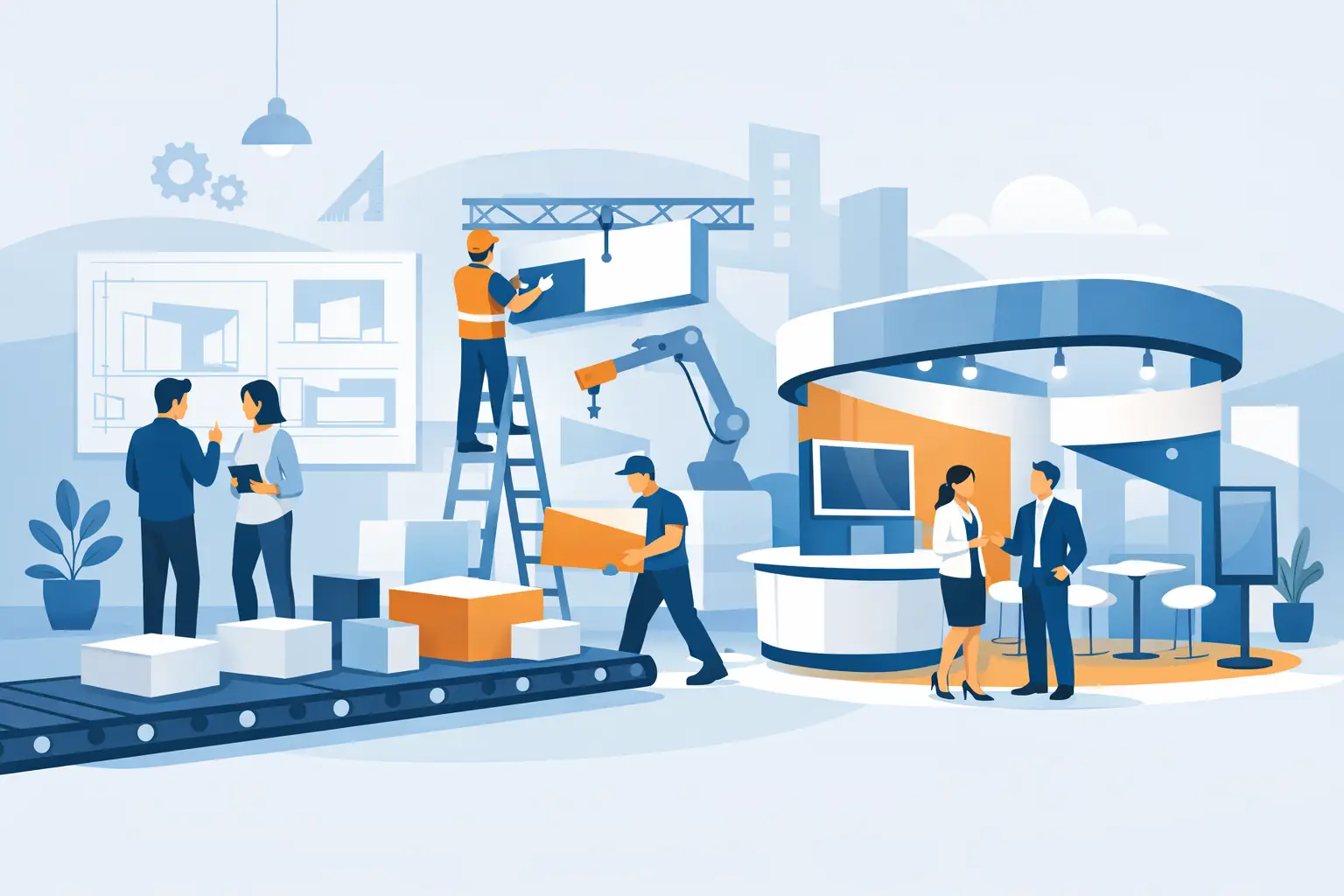
Exhibition Stand Manufacturing Services That Work
A stand that looks impressive in a render but fails on the show floor is not a successful investment. Exhibition stand manufacturing services matter because exhibitions are live environments with fixed deadlines, technical restrictions, heavy foot traffic, and no room for improvisation. For brands that need visibility, consistency, and operational control, the quality of manufacturing has a direct effect on how the audience experiences the business.
The real value of a well-produced stand goes beyond appearance. It affects build speed, on-site safety, material durability, lighting performance, storage planning, and the way visitors move through the space. Decision-makers often focus first on concept design, which is understandable, but execution is where exhibition performance is won or lost.
What exhibition stand manufacturing services actually include
At a practical level, exhibition stand manufacturing services cover the technical and production work required to turn a concept into a physical branded environment. That usually starts with shop drawings, material selection, fabrication planning, and production scheduling. It then moves into carpentry, metalwork, graphic production, finishing, electrical integration, assembly preparation, transport, installation, dismantling, and in some cases storage or refurbishment.
The strongest service partners do more than build what is on a drawing. They review feasibility early, identify risks before fabrication starts, and align the stand with venue rules, timeline constraints, and brand standards. That matters when a marketing team wants a high-impact result but also needs confidence that every element can be delivered as specified.
For exhibitors managing regional events or large-scale launches, this integrated approach reduces friction. Instead of coordinating separate design, print, production, and installation vendors, the brand works with one execution partner that can control quality from concept through on-site delivery.
Why manufacturing quality shapes exhibition results
Visitors may not know what substrate was used for a wall panel or how the lightbox was engineered, but they will notice the outcome. Uneven finishes, poor edge detailing, weak lighting, unstable counters, and misaligned graphics all affect credibility. In crowded exhibition halls, small quality issues become highly visible.
Good manufacturing supports brand perception in quiet but powerful ways. Surfaces look clean, joins are consistent, graphics are accurate, and the stand feels deliberate rather than assembled under pressure. That level of finish helps brands present themselves with confidence, especially when the audience includes partners, investors, distributors, or procurement teams.
There is also a practical side. A stand built properly is easier to install, safer to use, and more likely to withstand transport and repeated handling. If you exhibit multiple times a year, durability has a direct budget implication. The cheapest build is rarely the most cost-effective one over time.
Choosing the right exhibition stand manufacturing services
Not every project needs the same production model. A one-time product launch may justify a fully custom structure with specialized finishes and integrated technology. A company attending multiple trade shows may benefit more from modular components that can be reconfigured across different footprints. The right decision depends on event goals, budget, timeline, and reuse plans.
When evaluating a manufacturing partner, experience should be measured in execution terms, not just visual portfolios. Ask how they handle production drawings, pre-build checks, venue compliance, transport planning, and on-site supervision. A strong partner can explain how the stand will be fabricated, how risks are managed, and where design adjustments may improve efficiency without weakening the impact.
Capacity also matters. Some vendors produce attractive concepts but rely heavily on outsourced fabrication. That model can work, but it can also create gaps in accountability. When design intent, material decisions, and manufacturing oversight are managed closely, the result is usually more consistent.
Design ambition and production reality
This is where many exhibition projects become expensive. A creative concept may look striking, but some forms, finishes, or suspended features can add significant complexity in manufacturing and installation. That does not mean ambitious design should be avoided. It means the design should be developed with production logic from the start.
The best outcomes happen when design and manufacturing teams work together early. Curves, hidden storage, display zones, LED integrations, and branded architectural details can all be achieved, but they need to be engineered properly. Material thickness, load requirements, assembly methods, and access for maintenance all need to be resolved before production begins.
There is always a trade-off between visual complexity and operational efficiency. In some cases, simplifying one feature allows budget to be redirected toward better lighting, stronger graphics, or a more inviting meeting area. Those choices often improve stand performance more than a difficult structural statement piece.
Materials, finishes, and build decisions that matter
Manufacturing quality is heavily influenced by material selection. Wood, metal, acrylic, glass, fabric, vinyl, and composite systems all serve different purposes. The right combination depends on the desired look, transportation method, budget, and whether the stand will be reused.
Premium finishes can elevate a stand, but they must suit the environment. High-gloss surfaces may photograph well but can show fingerprints under exhibition lighting. Delicate finishes may not hold up well during repeated installation cycles. Fabric graphics can create clean visual impact at scale, while rigid panels may offer a more architectural feel. Neither is universally better. It depends on the use case.
Lighting deserves the same attention as materials. Even a well-built stand can feel flat if the lighting is poorly planned. Product displays, meeting areas, signage, and feature walls all need different lighting treatment. Manufacturing teams that understand how lighting integrates with structure and graphics can help create a more controlled brand presentation.
Timelines are part of the service
In exhibitions, late decisions have production consequences. Delayed approvals, last-minute redesigns, incomplete artwork, and changing venue requirements can all push pressure downstream into manufacturing. That pressure often shows up in finish quality or installation risk.
A reliable production partner builds schedules around milestones, not assumptions. That includes final design sign-off, graphic submission deadlines, mockups where required, pre-build reviews, packing, transport windows, and installation access times. Good planning protects quality.
For business teams, this is more than project management discipline. It is a safeguard against reputational risk. If a stand is not ready when the hall opens, the damage is immediate and public. Service quality in this category is measured by punctual delivery as much as visual output.
The advantage of working with an integrated partner
Exhibition projects often involve more than the stand itself. Printed collateral, signage, branded giveaways, digital screens, registration counters, event staffing, and supporting campaign visuals all need to align. When these elements are split across multiple suppliers, coordination becomes harder and inconsistencies become more likely.
An integrated partner can align manufacturing with the broader event ecosystem. That means the stand design connects with the printed graphics, the signage follows the same visual system, and the on-site experience supports the wider campaign objective. For companies that want efficiency and stronger brand control, that structure saves time and reduces avoidable errors.
This is where a full-service execution model becomes especially valuable. A company like T2 Arabia can support not only exhibition production but also the surrounding branding, print, signage, and event requirements that shape the final audience experience.
What business buyers should look for before approval
Before approving a stand project, business leaders should look beyond aesthetics and ask whether the production plan supports the event objective. A stand designed for lead generation should prioritize visibility, entry flow, and practical engagement zones. A stand built for meetings should focus more on privacy, comfort, and acoustic control. A launch stand may need a stronger digital or presentation feature.
They should also ask what happens after the event. Can the structure be reused, adapted, or stored? Are graphics replaceable? Is the stand cost-efficient across multiple shows, or is it built for one appearance only? These questions help shift the conversation from one-time spend to long-term value.
The best exhibition stand manufacturing services do not just produce a structure. They create a build strategy that supports brand performance under real event conditions. That requires creative understanding, technical discipline, and responsive project control.
A successful exhibition stand is never just a backdrop. It is a physical expression of your brand under pressure, in public, and against direct competition. When manufacturing is handled with precision, the result is more than a polished space – it is a stronger presence, a smoother event, and a brand experience people remember for the right reasons.