
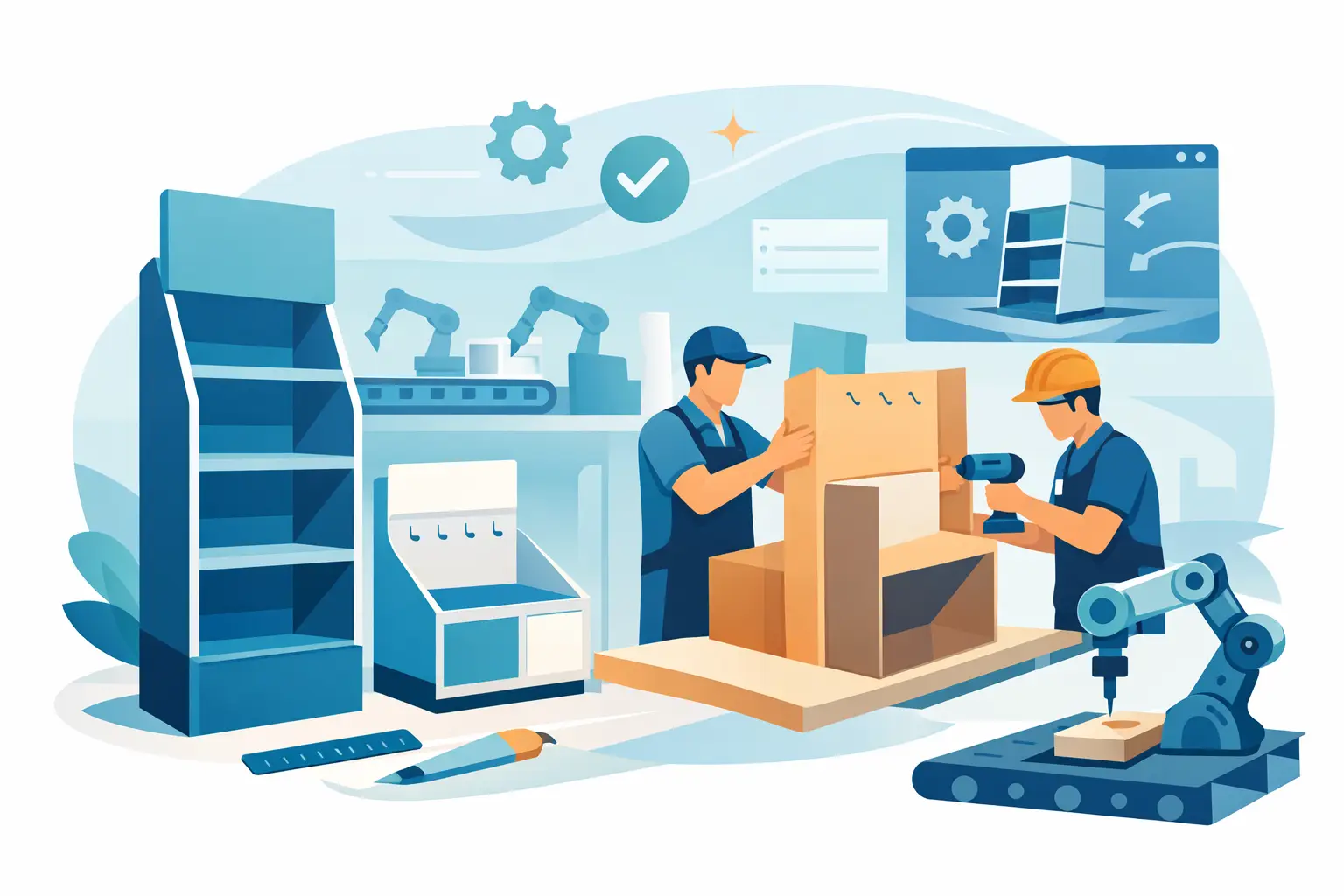
Custom Display Stand Production That Performs
A display stand rarely fails because the brand lacked ambition. It fails because the idea looked strong in a presentation, then lost impact in fabrication, logistics, installation, or visitor flow. That is why custom display stand production matters. It is not only about building a stand that looks impressive. It is about translating a brand concept into a physical environment that performs under real event conditions.
For exhibitors, retail marketers, and event teams, the stand is often the first proof of brand quality. Visitors make fast judgments based on structure, finish, lighting, layout, and how easily they can engage with the space. A well-produced stand supports sales conversations, brand recall, and operational efficiency. A poorly produced one creates friction before a single conversation begins.
What custom display stand production really involves
Many buyers initially think of production as the final fabrication stage. In practice, it starts much earlier. Strong custom display stand production connects creative intent with engineering, material planning, print execution, transportation, installation, and site readiness.
That connection is where quality is protected. A visually striking concept may require material substitutions if weight limits apply. A retail-focused stand may need a different traffic pattern than an exhibition booth. A product launch display may prioritize storytelling and lighting, while a trade show stand may prioritize meeting space, storage, and lead capture. The production process has to reconcile visual goals with practical constraints.
This is why experienced production partners do more than manufacture components. They assess scale, venue rules, structural feasibility, branding accuracy, and timeline risk before fabrication begins. That disciplined approach reduces rework, protects budgets, and keeps the final build aligned with business objectives.
Why custom display stand production affects event results
A custom stand is not a decorative asset. It is a working business tool. When production is handled correctly, it shapes how people move, what they notice, and how long they stay.
First, it affects visibility. Height, sightlines, lighting placement, and graphic integration all influence whether the stand draws attention from across a hall or disappears into the background. Second, it affects credibility. Precision-built finishes, clean branding application, and stable structures signal professionalism. Third, it affects usability. Staff need a layout that supports conversations, demonstrations, storage access, and crowd management without confusion.
There is also a commercial impact. Better production often leads to fewer on-site issues, faster setup, and a more polished visitor experience. That does not automatically mean the most expensive stand is the best choice. It means the stand should be built to support the specific goal of the event, whether that is lead generation, product education, executive networking, or retail conversion.
The key decisions that shape production quality
The success of a stand is usually decided by a handful of production choices. Materials are one of the biggest. Wood, metal, acrylic, fabric, tension systems, and modular components each have different advantages. Wood can support premium finishes and custom forms, but it may add weight and transport complexity. Fabric systems are lighter and faster to deploy, but they do not suit every brand expression. Acrylic can create a clean contemporary look, yet it needs careful handling to maintain finish quality.
Print execution is another critical factor. Even excellent structures can underperform if graphics are poorly color matched, incorrectly scaled, or applied with visible imperfections. For brands with strict identity systems, production teams must maintain consistency across display panels, signage, counters, packaging elements, and digital screens.
Lighting often receives less attention than it should. Good lighting can direct focus, improve product presentation, and strengthen the perceived value of the stand. Bad lighting can flatten premium finishes, create shadows in meeting areas, or make branded surfaces look inconsistent. Production planning should treat lighting as part of the experience, not as an afterthought.
Then there is durability. A one-day corporate activation has different demands than a stand intended for multiple exhibitions across several cities. Reusability, packing design, assembly method, and maintenance requirements all need to be considered early. It depends on whether the client is investing in a one-time statement piece or a long-term event asset.
Custom display stand production works best when design and execution stay connected
One of the most common issues in exhibition and activation projects is fragmentation. A creative team develops the concept, a separate vendor handles fabrication, another supplier manages print, and an on-site crew tries to solve the resulting gaps under deadline pressure. That model can work, but it increases the chance of inconsistencies, delays, and budget drift.
Integrated execution creates a stronger result. When strategy, design, production, graphics, signage, and installation are aligned, decisions happen faster and quality is easier to control. Brand intent stays intact because the people building the structure understand how it is meant to function in the real environment.
For clients managing large events or regional campaigns, this matters even more. Consistency across touchpoints is not a minor detail. A display stand must often work alongside branded print materials, directional signage, stage design, digital screens, promotional assets, and post-event content capture. The production process should support that wider ecosystem rather than treat the stand as an isolated object.
How timelines affect custom display stand production
Time is one of the biggest variables in stand quality. Tight deadlines do not always make strong execution impossible, but they narrow options. Material availability may shift. Testing time may be reduced. Transport planning becomes more fragile. Last-minute artwork changes can also affect print accuracy and installation sequencing.
A realistic timeline allows room for design refinement, technical review, prototype checks where needed, and proper finishing. Premium production is rarely only about craftsmanship. It is also about giving each stage enough time to be done correctly.
That said, speed still matters. Corporate events, exhibitions, and promotional campaigns often move quickly. The right production partner should be able to accelerate without sacrificing control. That requires organized workflows, supplier coordination, and clear approval structures. In a project-based environment, responsiveness is valuable, but responsiveness without discipline usually creates problems later.
What buyers should ask before approving a stand project
Before approving any build, decision-makers should understand how the stand will be used, not just how it will look. Will the space support product demos? Is there enough concealed storage? How will visitors enter and exit? Can the structure be reused? Are the finishes appropriate for the venue lighting? What are the venue’s rigging, power, and access restrictions?
It is also worth asking how production risk is managed. Who checks dimensions against venue plans? Who owns print color approval? What happens if a component arrives damaged? How is on-site installation supervised? These are operational questions, but they directly affect brand presentation.
A capable partner will answer them clearly and early. That level of transparency builds trust because it shows the stand is being planned as a live environment, not just as a rendered concept.
Where production quality creates the strongest return
Not every project requires the same level of customization. Some campaigns benefit from modular systems with tailored branding. Others justify fully bespoke fabrication because the audience, product value, or brand visibility stakes are higher. The right investment depends on context.
For high-profile exhibitions, investor events, government forums, luxury retail activations, and major product launches, production quality tends to have a visible return. In these settings, visitors notice detail. Finishes, build precision, and spatial planning all contribute to how the brand is perceived. For recurring trade events, the smarter return may come from a reusable system designed for flexibility, efficient transport, and easy updates.
This is where a service-led production partner adds value. The goal is not to push the biggest build. The goal is to recommend the stand solution that matches the business objective, operating timeline, and brand standard. That balance between creativity and control is what turns a display asset into a reliable performance tool.
At T2 Arabia, that philosophy aligns with how complex event and branding projects should be delivered – with precision in planning, confidence in execution, and a clear understanding of the full brand environment.
The standard has shifted
Audiences now expect more from physical brand spaces. They expect clarity, visual confidence, smooth interaction, and a setting that feels intentional. That raises the bar for custom display stand production. It is no longer enough to create a structure that simply fills space. The stand has to attract, support, and represent the brand under pressure.
The best results come from production that respects both creativity and logistics. When those two sides work together, the stand does more than look finished. It works hard for the brand long after the first impression is made.