
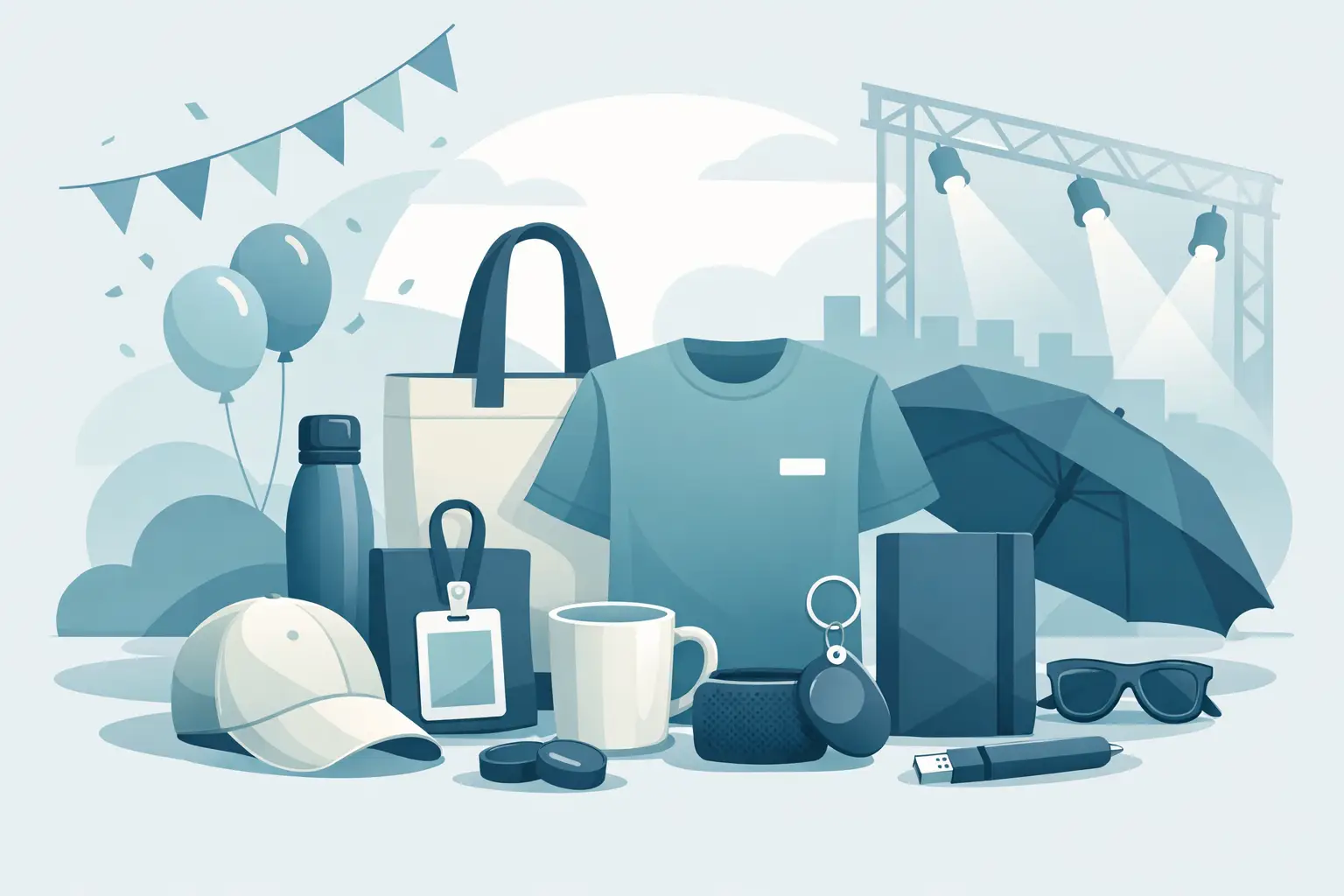
12 Best Branded Merchandise Ideas for Events
A conference attendee may meet dozens of companies in a single day, but the item they use on the flight home, at their desk, or during a workout is the one that keeps a brand in view. The best branded merchandise ideas do more than carry a logo. They give people something useful, well-made, and relevant to the experience your organization created.
For event managers and marketing leaders, merchandise is not a last-minute giveaway decision. It is a physical extension of the brand, the event theme, and the audience relationship. The right item can start conversations at a booth, reward participation, support internal culture, and keep campaign visibility going long after the venue is cleared.
Choose Merchandise With a Clear Job to Do
Before selecting products, define what the merchandise must achieve. A high-volume exhibition giveaway needs immediate appeal, portability, and an approachable cost per unit. A VIP gift can be more considered, with premium materials and personal details. Employee recognition merchandise should feel useful enough to become part of someone’s routine.
Brand fit matters as much as product appeal. A technology company may benefit from a charging accessory or a clean desk tool, while a wellness-focused activation may call for a quality water bottle, recovery kit, or fitness item. A generic product can still perform well when the design is strong, but relevance gives it greater staying power.
Quality is a practical brand decision. A pen that fails, a tote with weak handles, or a poorly printed logo can undermine the exact impression an event was designed to create. It is often better to order fewer items with stronger materials and precise decoration than to distribute large quantities that are quickly discarded.
Best Branded Merchandise Ideas That Earn a Place
1. Premium reusable water bottles
A reusable bottle is one of the most reliable choices for conferences, employee programs, and outdoor activations. It has daily utility, a generous branding area, and a longer lifespan than many conventional giveaways. Choose insulated stainless steel for premium audiences and durable BPA-free options when broader distribution is the priority.
2. Branded tote bags with purpose
Tote bags are especially effective at exhibitions because attendees need somewhere to carry brochures, samples, and personal items. The difference is in the execution: use heavyweight fabric, reinforced stitching, and artwork that feels like a design rather than a logo placed in the center. A well-designed tote can continue to promote the brand in public settings.
3. Wireless charging pads
For executive meetings, product launches, and technology-focused events, a wireless charging pad feels current and practical. It also remains visible on a desk, creating regular brand exposure. Confirm device compatibility and select a finish that supports crisp, durable logo application.
4. Curated welcome kits
A welcome kit turns several modest items into one intentional experience. It might include a notebook, pen, reusable bottle, snacks, and a personalized event card, all presented in branded packaging. This format works well for corporate off-sites, new-hire programs, delegate registration, and VIP hospitality because it creates a strong first impression.
5. High-quality notebooks and pens
Notebooks are familiar, but they remain effective when they are designed with care. Consider textured covers, subtle debossing, color-matched elastic closures, and practical page layouts. Pairing the notebook with a smooth-writing metal pen creates a professional set that suits meetings, training sessions, and leadership events.
6. Travel accessories
Luggage tags, passport holders, packing organizers, and compact travel pouches are excellent options for incentive trips, international conferences, and executive audiences. Their value comes from timing: give them when travel is part of the event experience. Keep the branding refined, since discreet marks often feel more premium on personal travel items.
7. Apparel people will actually wear
Apparel can create strong visibility, but only when fit, fabric, and design receive real attention. A soft t-shirt, lightweight jacket, cap, or performance polo can become a favorite item rather than a one-time uniform. Size planning adds complexity, so apparel is usually best for registered participants, teams, or smaller targeted groups instead of uncontrolled foot traffic.
8. Desk accessories
Cable organizers, laptop sleeves, mouse pads, webcam covers, and compact desktop stands bring the brand into the workday. These products suit B2B audiences because they solve small, recurring frustrations. They also provide a natural bridge between a live event and a client’s everyday professional environment.
9. Coffee and tea sets
A branded mug, insulated tumbler, or compact coffee kit offers comfort as well as utility. These items are particularly effective for client appreciation, employee engagement, and seasonal campaigns. A premium finish and understated branding are key, especially when the product is intended for a home or executive office.
10. Wellness and recovery items
Wellness merchandise can support an active event theme or internal engagement initiative. Branded resistance bands, cooling towels, yoga mats, sleep masks, or mini recovery kits give a campaign a more personal dimension. The product should align with a credible message, not simply follow a trend.
11. Tech organizers and everyday carry kits
A compact organizer for cables, adapters, earbuds, and chargers is a useful choice for professionals who move between offices, meetings, and travel. It is also easy to build into a larger event gift. Add a power bank or charging cable only after confirming safety standards, capacity requirements, and production lead times.
12. Limited-edition event collectibles
For launches, anniversaries, and high-profile activations, a limited-edition item can make attendance feel more valuable. This could be an illustrated pin, a numbered art print, a premium badge holder, or a locally inspired keepsake. Collectibles work best when they connect directly to the event concept and are not treated as generic souvenirs.
Make the Branding Feel Intentional
Merchandise succeeds when it belongs to the wider event system. The colors, typography, tone, packaging, signage, and digital registration journey should all support the same visual language. A product with excellent print quality can still feel disconnected if it does not match the campaign identity.
Decoration methods should be selected for the material and expected use. Embroidery brings depth to apparel and fabric goods. Debossing creates a restrained premium finish on leather-like covers and notebooks. Screen printing works well for bold graphics, while UV printing can support detailed artwork on hard surfaces. The right method protects both the design and the perceived value of the item.
Packaging deserves the same attention. A simple branded sleeve, information card, or reusable box can raise the impact of an otherwise familiar product. It also gives teams an opportunity to include a personal note, event schedule, QR code, or message that guides the recipient toward the next brand interaction.
Plan Distribution as Carefully as Production
Do not place premium merchandise on an unattended table and hope it reaches the right people. Tie high-value items to purposeful moments: a booked meeting, a product demonstration, a completed survey, a workshop session, or VIP check-in. This approach controls inventory while making the gift feel earned rather than incidental.
Lead time is another operational factor. Custom sourcing, samples, approvals, printing, packing, and delivery all require coordination. For complex events, merchandise should be planned alongside exhibition stands, event signage, delegate kits, and on-site logistics. T2 Arabia approaches these details as one connected brand experience, helping teams maintain consistency from concept through final distribution.
The strongest merchandise is not necessarily the most expensive item in the room. It is the item that people choose to keep because it is useful, attractive, and unmistakably connected to a well-executed brand experience.