
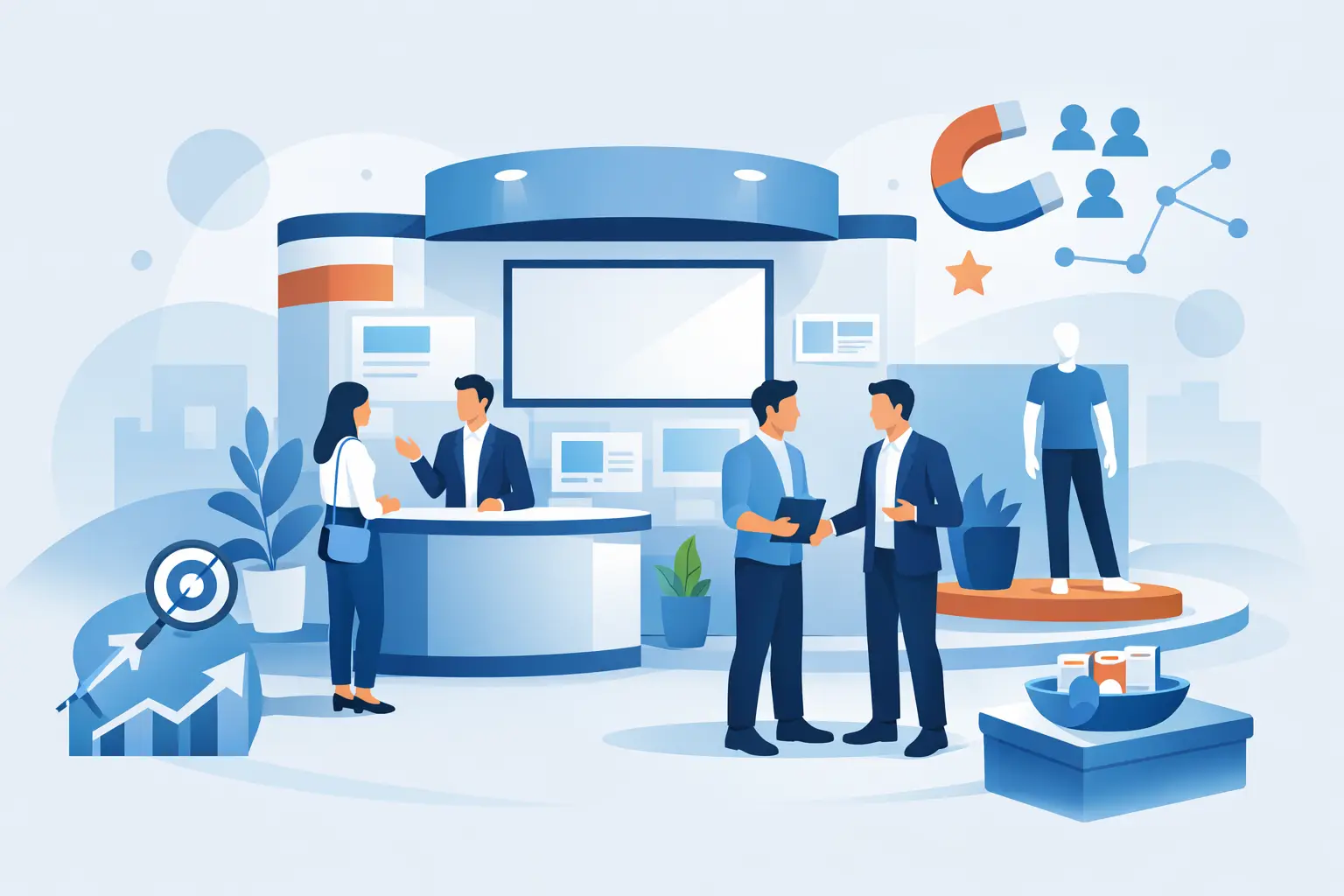
Exhibition Stand Design Guide for Better Leads
A busy exhibition floor gives visitors seconds to decide where to stop. This exhibition stand design guide is built for brands that need more than an attractive structure – they need a space that makes their value clear, supports their team, and creates qualified business conversations.
The strongest stands are not designed as oversized billboards. They are planned as working brand environments, where architecture, messaging, technology, hospitality, and staff movement all serve a defined commercial goal. Whether the objective is lead generation, product education, partner meetings, or brand visibility, every choice should earn its place.
Start With the Business Outcome
Before selecting materials, colors, or screen sizes, define what success looks like. A stand designed to launch a technical product will require a different experience from one built for executive networking or retail sampling. Without this decision, teams often approve impressive visuals that do little to move visitors toward a meaningful action.
Set one primary objective and a small number of supporting measures. This may include qualified leads, booked demonstrations, meetings with target accounts, product trials, media engagement, or social content captured during the event. The objective should shape the entire visitor journey, from what people see from the aisle to what happens after the first conversation.
It also helps to identify the audience before the creative concept begins. Decision-makers need concise proof, credibility, and a comfortable setting for discussion. Technical users may need hands-on demonstrations and clear product comparisons. General attendees may respond better to a simple visual hook or interactive moment. Designing for everyone usually means connecting deeply with no one.
Plan the Exhibition Stand Design Around Visitor Flow
A stand can look polished in a 3D render and still fail on the show floor if access, sightlines, and circulation are not considered. Visitors should understand where to enter, what to explore, and where to speak with the team without needing instructions.
Create a clear approach from the aisle
Your main message must be visible before a visitor reaches the stand. Use a short, benefit-led statement rather than a dense description of services. Large visual elements, elevated signage, and controlled lighting can increase visibility, but they should reinforce the message rather than compete with it.
Corners and open sides offer valuable exposure. A stand with multiple open faces should not place solid walls where they block natural entry. Instead, use those edges to create welcoming zones, product moments, or digital content that can be understood at a glance.
Give each zone a practical job
Most effective stands include a discovery zone, an engagement area, and a conversation space. The discovery zone earns attention through branding, a product display, or a visual story. The engagement area gives visitors a reason to stay, perhaps through a demonstration, touchscreen, sample, or short presentation. The conversation space allows the sales team to qualify interest and continue the discussion.
These zones do not need to be large, but they must not overlap in a way that creates congestion. A product demonstration should not block access to a meeting table. A hospitality counter should not become the only route through the stand. Good spatial planning protects the visitor experience during peak traffic, not just during quiet moments.
Build One Message, Not Five Competing Stories
Exhibitions are demanding environments. Visitors are surrounded by noise, movement, sales pitches, and competing visuals. A stand that tries to explain every capability, product line, and campaign at once will feel unclear.
Choose one central idea that reflects the event objective. It may be a new product benefit, a market position, or a business challenge your organization solves. Then use the stand graphics, digital content, printed collateral, and staff talking points to support that same idea.
Brand consistency matters beyond logo placement. Fonts, image style, tone of voice, colors, and presentation design should feel connected across every touchpoint. When a visitor later sees a follow-up email, proposal, or social post, the experience should feel familiar. This continuity turns a brief stand visit into a more credible brand impression.
Choose Materials and Technology With Purpose
Premium finishes can strengthen perceived quality, but expensive materials are not automatically the right investment. The best choice depends on the brand, event duration, venue rules, transport requirements, and whether the stand will be reused.
Custom-built structures offer greater creative freedom and can create a stronger visual presence for major launches or flagship exhibitions. Modular systems may be more efficient for recurring events, especially when components can be reconfigured for different footprints. A hybrid approach often delivers the best balance: reusable core elements combined with event-specific graphics, feature walls, or product displays.
Technology should solve a communication problem. LED walls can create strong visibility and motion, but fast-moving content may distract from a complex sales message. Touchscreens are useful when visitors genuinely benefit from self-guided exploration. Audio needs careful planning because open exhibition halls are noisy, and uncontrolled sound can disturb both guests and neighboring exhibitors.
For presentations, product films, and interactive tools, always prepare a backup plan. Internet access can be inconsistent, equipment can fail, and show schedules can change. Download essential content locally, test all devices on-site, and ensure staff can continue the conversation without relying entirely on a screen.
Design for Your Team, Not Only Your Visitors
The people working on the stand are part of its design. If they have nowhere to store materials, charge devices, prepare samples, or take a private call, operational problems quickly become visible to visitors.
Include discreet storage for bags, stock, cleaning supplies, and marketing materials. Plan power locations for laptops, displays, lighting, and charging. If the exhibition includes long operating hours, consider a small staff support area away from visitor sightlines. These details protect the polished front-of-house experience.
Staff positioning also deserves attention. A reception point can provide a clear welcome, but it should not become a barrier between the team and attendees. Train staff to greet visitors naturally, ask relevant opening questions, and guide them to the right person or zone. The stand creates the opportunity; the team turns it into a business relationship.
Make Meetings Comfortable and Intentional
Not every lead requires a formal meeting room. In fact, closed spaces can feel unnecessary for early-stage conversations. However, high-value discussions, contract conversations, and confidential product demonstrations may require privacy and acoustic control.
Use the level of privacy that fits the type of interaction. Open lounge seating can encourage approachable, short conversations. Semi-private booths create focus while keeping the stand visually active. Fully enclosed meeting rooms work well when senior stakeholders are expected, but they consume space and can reduce the stand’s sense of openness.
If meetings are a priority, make booking easy before and during the show. Clear appointment management, visible availability, and staff coordination prevent the common problem of a premium meeting space sitting empty while key prospects wait elsewhere.
Measure What Happened After the Crowd Leaves
Footfall is useful, but it is not enough. A busy stand can produce few quality opportunities if the experience attracts the wrong audience or does not give staff a clear way to capture details.
Create a lead process before the event begins. Define what qualifies a lead, what information the team should record, and who owns follow-up. A simple process that the team uses consistently is better than a complicated form that slows every conversation.
Review more than lead volume after the event. Consider meeting quality, product demonstration attendance, engagement with key content, social response, and the number of target accounts reached. These insights should inform the next stand design, including which zones attracted attention and which messages prompted the strongest conversations.
For organizations managing exhibitions across Saudi Arabia and the Gulf, an integrated partner can reduce the risks of fragmented delivery. T2 Arabia brings creative planning, exhibition production, branded print, signage, digital support, and on-site execution into one coordinated process, helping teams maintain control from concept through post-event presentation.
Treat the Stand as Part of the Full Campaign
An exhibition stand should not begin when the venue doors open or end when the structure is dismantled. Pre-event invitations, appointment outreach, teaser content, and sales preparation create the audience before the show. Prompt follow-up, tailored proposals, and post-event content continue the relationship afterward.
The most valuable design decision may be the simplest one: make it easy for the right visitor to understand why they should stop, what they should do next, and who they should speak with. When the physical space and the commercial plan work together, a stand becomes more than a display – it becomes a dependable platform for growth.