
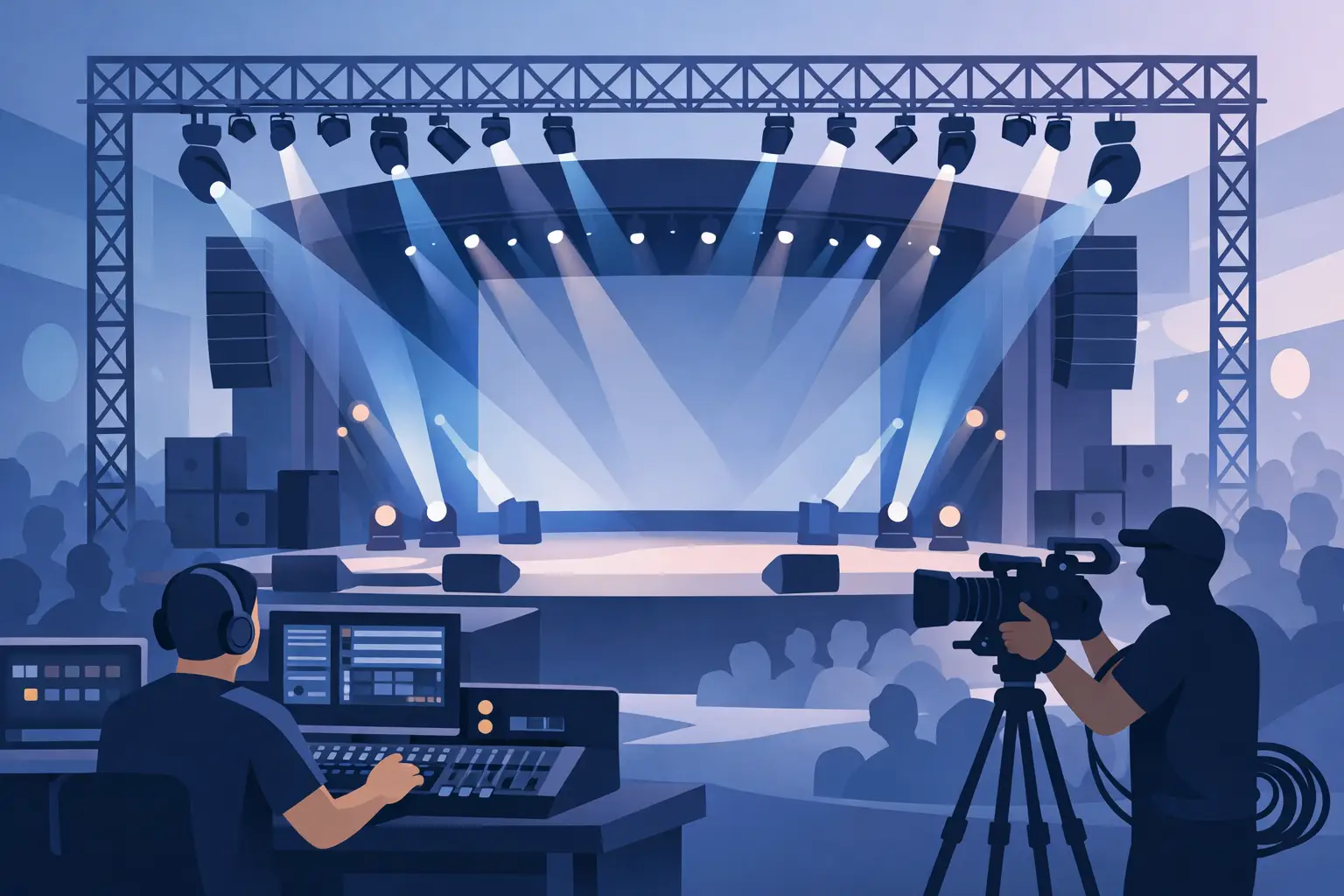
Event Stage and Lighting Production That Performs
A stage can carry a keynote, a product reveal, an awards ceremony, or a brand promise. It can also distract from all of them when sightlines are poor, lighting feels flat, or technical elements compete with the message. Professional event stage and lighting production turns a venue into a controlled brand environment where every visual decision supports the audience experience.
For corporate events, exhibitions, conferences, and activations, production is not simply a matter of renting equipment. It is the disciplined coordination of creative design, venue constraints, show flow, safety, branding, and on-site technical support. When those elements are planned as one system, the event feels purposeful from the first arrival moment to the final presentation.
Why Event Stage and Lighting Production Matters
The stage is the visual center of an event. It establishes authority for speakers, directs attention to content, and provides a setting that audiences associate with the host brand. Lighting adds dimension, focus, mood, and energy. Together, they determine whether a room feels considered or merely occupied.
For business audiences, this has practical consequences. A leadership conference needs a stage that keeps presentations clear across the room and on camera. A product launch needs a reveal moment with controlled visual impact. An exhibition stand may require compact lighting that draws visitors in without overpowering neighboring displays. The right approach depends on the objective, but the standard remains the same: every production choice should make communication stronger.
Strong technical production also protects brand consistency. Stage finishes, LED content, podium design, scenic elements, screen placement, and lighting color temperature should work with the wider identity system. If event graphics say one thing while the physical environment says another, attendees notice the disconnect. A coordinated production partner prevents that fragmentation before it reaches the venue.
Start With the Audience and the Event Objective
The best production plans begin before fixture selection or stage drawings. First, define what attendees need to see, hear, understand, and remember. A sales conference, employee town hall, government forum, gala dinner, and consumer activation have different production requirements because their audiences behave differently.
A conference with long presentation sessions may prioritize comfort, readable screens, even front lighting, and reliable confidence-monitor positioning. An awards evening may place more emphasis on entrance sequences, walk-on lighting, stage depth, and camera-ready moments. For an activation, the focus may shift toward visitor flow, shareable visuals, product visibility, and rapid engagement.
This early alignment helps determine the right scale. Bigger is not always better. An oversized stage in a modest room can make the audience feel distant, while an undersized platform can reduce speaker visibility and weaken perceived importance. The right design balances venue dimensions, audience capacity, content needs, and the desired atmosphere.
Build Around the Show Flow
A stage should support what happens on it minute by minute. Consider speaker entrances, panel discussions, presentations, award handovers, entertainment, video playback, and closing remarks. Each segment may need different lighting looks, screen content, microphone positions, or furniture configurations.
Show flow planning reduces awkward transitions. For example, a panel table may look appropriate for a discussion but become an obstacle during an award presentation. A well-designed stage uses modular elements or preplanned changeovers so the event keeps moving without unnecessary pauses. The audience may never see the preparation, but they will feel the confidence of a program that stays on pace.
Design the Stage for Visibility, Brand Presence, and Safety
Stage design must solve several problems at once. It needs to provide clear sightlines, create a strong visual frame for content, accommodate equipment, and allow speakers to move safely. This is why stage planning should be based on technical drawings and venue measurements rather than assumptions.
Screen size and position are central decisions. Attendees at the back of the room must be able to read key information without straining, while screen placement should not block views of speakers or create visual clutter. In rooms with columns, low ceilings, or limited depth, a wider format or multiple display surfaces may work better than one large central screen.
Branding should be integrated into the architecture of the stage, not added as an afterthought. Branded fascia panels, dimensional logos, backdrop treatments, animated screen content, and color-led scenic details can all reinforce identity. The goal is not to place a logo everywhere. It is to create a setting that feels unmistakably aligned with the organization hosting the event.
Safety remains non-negotiable. Platforms, stairs, ramps, cable routes, rigging points, and load-bearing structures all require professional assessment. The most impressive production design loses value if it creates risk for presenters, guests, or crew. Proper access, clear egress routes, secure installation, and venue compliance should be built into the plan from day one.
Use Lighting to Direct Attention
Lighting is often treated as decoration, yet its primary role is communication. It tells the audience where to look. It ensures speakers are visible. It separates the stage from the background and gives video teams the conditions they need to capture strong footage.
Front lighting is essential for faces, especially when presentations are filmed or streamed. Backlighting adds depth and visual separation, while side lighting can create shape and movement for entertainment or fashion-led moments. Color can support the mood and the brand palette, but it should be used with restraint. Deep saturated colors may look dramatic in the room while making speakers appear unnatural on camera.
A practical lighting plan typically combines functional and atmospheric layers. Functional lighting supports visibility, navigation, and safe movement. Atmospheric lighting creates energy in the room, defines scenic features, and adapts to different program moments. The balance changes by event type. A formal board presentation may need clean, understated lighting, while a launch event may benefit from more dynamic cues and programmed transitions.
Account for Cameras and Screens
Hybrid and recorded events add another layer of production planning. Lighting that appears excellent to a live audience can cause glare on screens, wash out LED displays, or create difficult contrast for cameras. Screen brightness, stage color, camera angles, presenter wardrobe, and lighting intensity should be considered together.
This is one area where testing matters. A technical rehearsal allows the production team to review real conditions, adjust fixture positions, refine camera framing, and identify visual issues before guests arrive. It is far more efficient to correct a reflection or shadow during setup than to try to manage it during a live session.
Production Success Depends on Technical Coordination
Stage and lighting are closely connected to audio, video, power, rigging, content, and event operations. Treating each area as a separate supplier responsibility can lead to missed handoffs, mismatched specifications, and last-minute compromises. Integrated planning creates a clearer path from creative concept to on-site delivery.
The production schedule should include venue access times, installation windows, testing, rehearsal, client sign-off, guest arrival, show operation, and dismantling. Time pressure is common in live events, particularly in busy venues with strict access rules. A detailed schedule gives every team a shared view of dependencies and priorities.
On-site support is equally valuable. Live events are dynamic by nature. Speakers may arrive late, presentation files may change, or a program may run ahead of schedule. A capable technical team responds with discipline, protecting the attendee experience without creating visible disruption. This is where experience becomes a tangible advantage.
At T2 Arabia, integrated event delivery brings staging, lighting, creative branding, print production, and operational support into one coordinated process. For clients, that means fewer gaps between the approved concept and the final event environment.
Questions to Ask Before Approving a Production Plan
Before finalizing event stage and lighting production, decision-makers should confirm that the plan answers a few essential questions. Can every attendee see the key content and presenters? Does the stage support the complete agenda, including transitions? Will the lighting work for both the room and any photo or video coverage? Are brand elements visible, controlled, and consistent? Has the design been checked against venue restrictions, safety requirements, power availability, and installation timing?
The answers should be specific, not assumed. A rendered concept can communicate the creative direction, but technical drawings, equipment specifications, and a rehearsal plan demonstrate whether the idea will perform under real event conditions.
A successful event does not need production for its own sake. It needs a stage that gives the message authority, lighting that guides attention, and a technical team prepared to deliver under pressure. When those pieces are planned with care, the audience is free to focus on what matters most: the brand, the people, and the moment being created.