
Offset Printing Versus Digital Printing
A conference brochure that feels premium, a retail campaign with exact brand color, and a last-minute event badge run do not place the same demands on print production. The choice between offset printing versus digital printing affects more than cost. It influences turnaround time, color consistency, material options, personalization, and the final impression your brand leaves with its audience.
For marketing leaders and event teams, the right method is not simply the one with the lowest unit price. It is the one that matches the purpose, volume, timeline, and quality expectations of the project. A product catalog may benefit from offset precision, while a set of personalized invitations may require digital speed. Knowing where each method performs best helps teams plan with confidence and avoid expensive compromises late in production.
Offset Printing Versus Digital Printing: The Core Difference
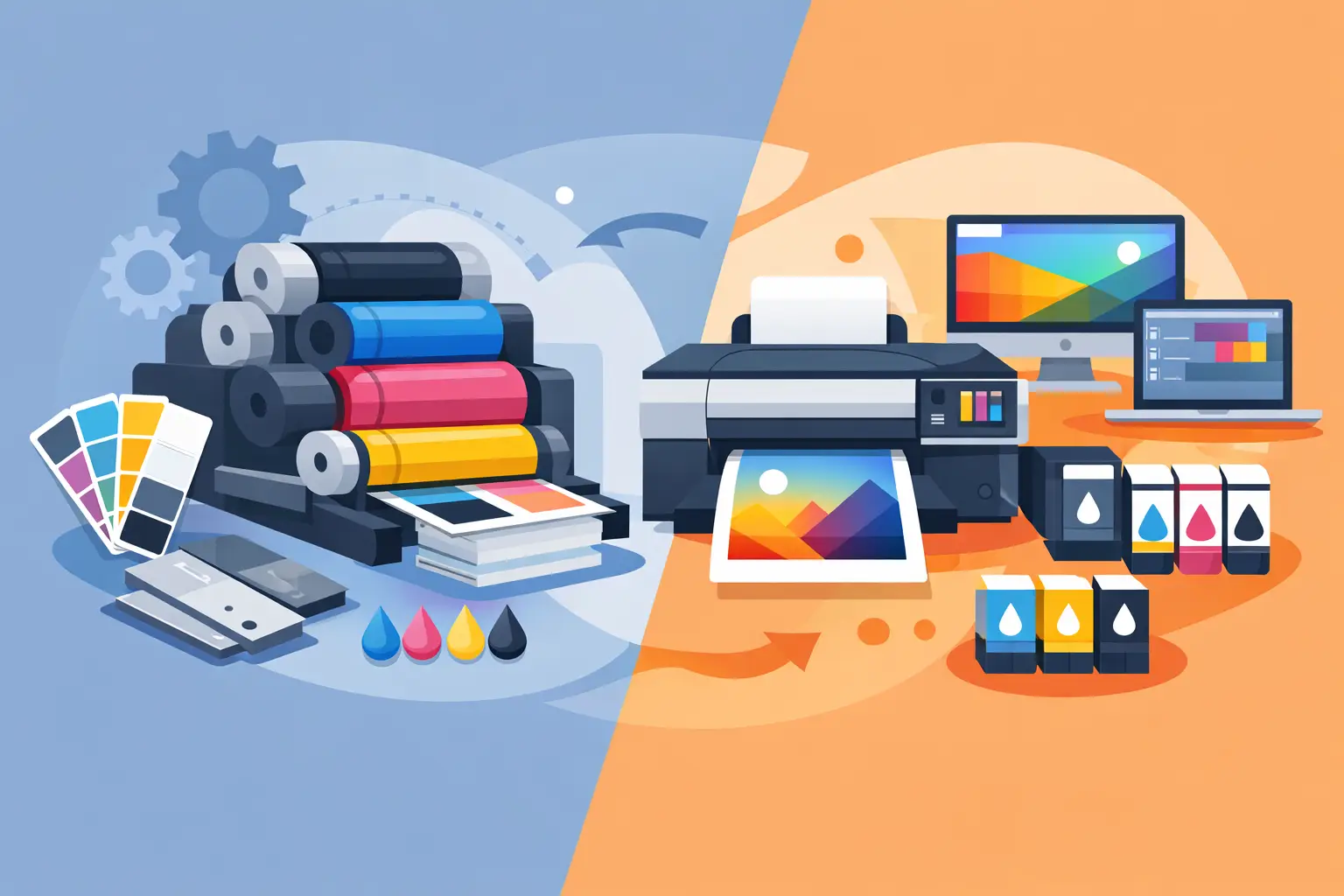
Offset printing transfers an image from metal plates to a rubber blanket and then onto paper, board, or another print surface. The setup process takes time, but once the press is running, it produces highly consistent results across large quantities. It has long been the preferred method for high-volume corporate materials, packaging, publications, and color-critical brand campaigns.
Digital printing applies the image directly from a digital file to the chosen substrate. There are no printing plates, which removes much of the preparation required by offset production. This makes digital printing practical for short runs, rapid revisions, variable data, and projects that need to move from approval to delivery quickly.
Neither option is universally better. The operational question is straightforward: Does the project need volume efficiency and exact repeatability, or does it need agility, customization, and speed?
When Offset Printing Delivers Greater Value
Offset printing is designed for scale. Although initial setup costs are higher because plates and press preparation are required, the cost per piece falls as quantities increase. For a large brochure run, a corporate annual report, a nationwide promotional campaign, or a high-volume product insert, offset can become the more cost-effective route.
Color is another major advantage. Offset presses use spot-color systems, including Pantone colors, that can be matched with exceptional accuracy. This matters when a brand relies on a recognizable signature color and expects it to remain consistent across exhibition brochures, premium folders, direct mail, and point-of-sale materials. For brand owners, reliable color reproduction protects visual identity from one printed piece to the next.
Offset also offers broad flexibility in ink, paper, and finishing choices. Specialty inks, metallic effects, textured stocks, heavy paper weights, varnishes, embossing, and certain coatings can create a more tactile, high-end result. A luxury invitation, investor presentation, hospitality menu, or flagship product catalog may justify this additional production depth because the physical experience is part of the message.
The trade-off is time. Offset production requires artwork to be finalized before plates are made, and meaningful changes after approval can add cost and delay. It is best suited to projects with a stable design, a clear production schedule, and enough volume to benefit from the press run.
Best-fit offset applications
Offset printing is often the strongest choice for large-volume catalogs, corporate stationery programs, premium brochures, branded folders, magazines, packaging components, and long-running promotional materials. It is particularly valuable when precise color matching and elevated finishing are non-negotiable.
Where Digital Printing Has the Advantage
Digital printing is built for responsiveness. A file can be updated quickly, proofed efficiently, and printed without plate production. For event teams working around changing attendee lists, revised agendas, sponsor updates, or late-stage campaign approvals, that flexibility can be the difference between a polished delivery and a rushed workaround.
Short runs are where digital printing is especially effective. Producing 25 pitch decks, 75 event programs, or 200 promotional cards through digital production is often more practical than absorbing the setup cost of offset. It also reduces waste when a team needs only the quantity it can use.
Personalization is a defining digital advantage. Variable data printing allows each piece to carry a different name, QR code, location, offer, image, or call to action. That capability supports personalized direct mail, name badges, targeted invitations, certificates, loyalty campaigns, and sales materials tailored to specific accounts. Instead of printing one generic message for every recipient, teams can create more relevant brand interactions at scale.
Digital quality has advanced significantly, and it can produce sharp, professional materials for a wide range of business needs. However, the exact appearance of solid colors, specialty inks, and certain finishes may differ from offset. If a project requires a specific Pantone match or a highly textured premium effect, teams should review physical samples before committing to production.
Best-fit digital applications
Digital printing is ideal for event credentials, short-run brochures, training manuals, presentation decks, personalized mailers, menus, prototype packaging, on-demand collateral, and time-sensitive promotional pieces. It is also the practical choice when content may change close to the delivery date.
Choosing by Quantity Is Useful, but Not Enough
Quantity is the most common starting point, but it should not be the only decision factor. A run of 1,000 flyers may lean toward offset if the design is stable and color-critical. That same quantity may favor digital if every flyer includes a unique offer code or if the campaign must launch in two days.
Timeline should be assessed early. Offset production includes prepress review, plate creation, press scheduling, drying time where applicable, and finishing. Digital production eliminates several of those stages, but it still needs careful file preparation, proofing, finishing, and quality checks. Fast production should never mean uncontrolled production.
Material and finish also shape the decision. If your creative concept depends on a particular uncoated stock, metallic ink, custom fold, or tactile finish, ask about the production method before the design is approved. Designing first and checking feasibility later can lead to unnecessary rework or a result that does not match the original vision.
A Practical Decision Framework for Brand Teams
Start with the audience experience you need to create. A premium leave-behind at an executive event has different requirements from a tactical flyer designed to drive registration. Then assess the expected quantity, delivery date, degree of personalization, color requirements, and finishing expectations.
If the project is high-volume, visually exacting, and unlikely to change after approval, offset printing usually deserves serious consideration. If the project is short-run, deadline-driven, personalized, or likely to require updates, digital printing is often the more efficient choice.
Many campaigns benefit from using both. A brand may produce its main exhibition catalog, presentation folders, and core campaign materials through offset printing, then use digital printing for attendee-specific inserts, staff badges, updated price sheets, and follow-up collateral. This combined approach protects consistency where it matters while retaining flexibility where it is needed.
Production Planning Protects the Final Result
The strongest print outcomes begin before a file reaches production. Artwork should be prepared at the correct size, with suitable resolution, bleed, safe margins, and color settings. Brand colors, finishing details, folds, binding, and delivery requirements should be confirmed during planning rather than treated as final-stage decisions.
Physical proofs remain valuable for color-sensitive or premium projects. Screens can help evaluate layout, but they cannot fully show how ink will appear on a specific paper stock or how a finish will feel in hand. A proof gives stakeholders a practical checkpoint before full production begins.
Working with a single partner that understands the broader campaign also improves control. Print assets do not exist in isolation at an exhibition or corporate event. They must align with signage, booth graphics, digital screens, branded giveaways, staff materials, and the overall visitor journey. T2 Arabia approaches print as part of that complete brand experience, combining creative direction with disciplined production management.
The best choice is the one that gives your audience a clear, credible, and consistent encounter with your brand. Define the outcome first, confirm the production realities early, and let the method serve the message rather than dictate it.