
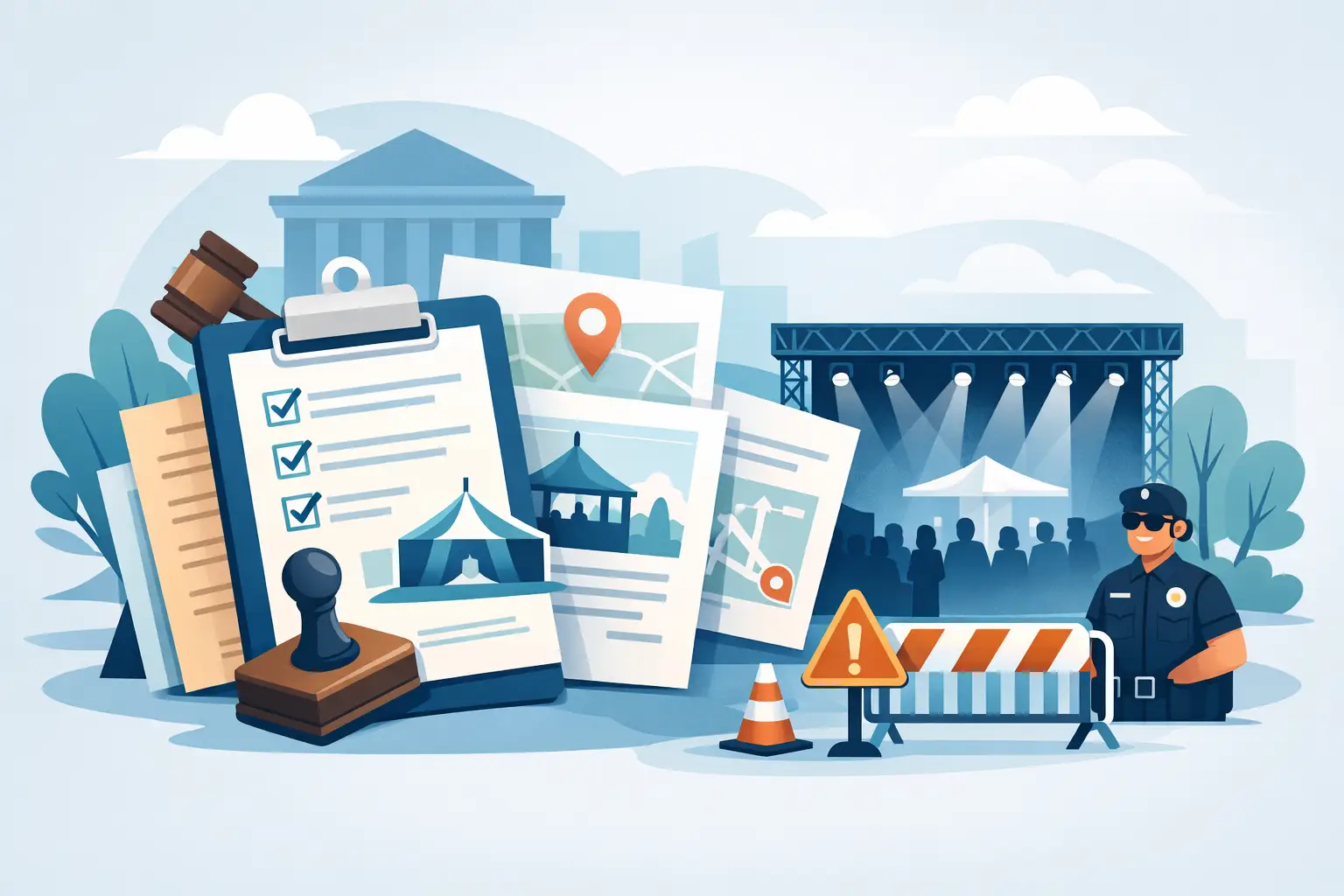
What Event Permits Are Required for Your Event?
A venue can be booked, the stage can be designed, and the guest list can be approved – yet an event can still be delayed by one missed authorization. Understanding the event permits required for your format, location, and production plan is a core part of protecting your timeline, budget, audience safety, and brand reputation.
For corporate events, exhibitions, conferences, and public activations, permits are not a last-minute administrative task. They influence site selection, production design, operating hours, traffic flow, temporary structures, food service, and the technical equipment you can use. The right approach is to identify approval requirements while the event is still being shaped, not after suppliers have been confirmed.
Why permits belong in early event planning
An event permit is formal authorization to hold an activity, install a structure, use a public or controlled space, or operate equipment under defined conditions. Depending on the jurisdiction, approvals may come from a municipality, venue operator, public safety authority, tourism body, transportation agency, or another local regulator.
The practical challenge is that there is rarely one permit that covers every element. A ballroom conference inside a hotel may have a relatively contained approval process. A large outdoor brand activation may involve permissions for the site, temporary builds, signage, amplified sound, electrical connections, crowd management, food vendors, parking, and road access.
Early permit planning gives the event team room to adapt. If a venue has restrictions on rigging, flame effects, load-in hours, or exterior branding, the creative concept can be adjusted before fabrication begins. That is less costly than redesigning a stand, stage, or activation footprint days before opening.
Event permits required depend on the event footprint
The permits required are determined by what the event does, where it takes place, and who it affects. Public-facing events generally carry more approval requirements than private internal gatherings, but a private event can still need permits when it includes temporary structures, specialist production, catering, or a high guest count.
Venue and site authorization
Start with the venue agreement. A venue may provide basic authorization to use the space, but that does not always cover the event’s full scope. Exhibition venues, hotels, malls, business districts, and public spaces each have their own operating rules, technical standards, insurance expectations, and contractor access procedures.
For outdoor spaces, organizers may need a site-use permit that defines the footprint, event dates, set-up and removal windows, access routes, and site restoration obligations. If the event extends onto sidewalks, plazas, parking areas, or roads, additional permissions may apply.
Temporary structures and production safety
Stages, truss systems, tents, exhibition stands, LED walls, elevated platforms, temporary seating, and branded installations can trigger structural or safety approvals. Requirements often depend on the size, height, load, location, and duration of the installation.
This is where technical production planning becomes essential. Drawings, load calculations, equipment specifications, fire-retardant certificates, and installation schedules may be requested before approval is issued. A visually ambitious concept is still only a viable concept if it can be built safely within the venue and authority requirements.
Fire, electrical, and crowd safety approvals
Events using temporary power, generators, high-capacity lighting, cooking equipment, special effects, or enclosed structures may require review by fire and safety authorities. Emergency exits, aisle widths, occupancy limits, extinguishers, evacuation procedures, and accessible routes must be considered as part of the layout, not added as an afterthought.
Crowd management also matters. A product launch with timed guest arrivals has different risks from an open public activation that attracts walk-in traffic. Security staffing, entry screening, queue barriers, first-aid coverage, and emergency communications should match the actual audience profile and venue conditions.
Sound, entertainment, and content permissions
Amplified sound, live performances, DJs, recorded music, and outdoor screens may need separate authorization. Local rules can set permitted operating hours, noise thresholds, speaker placement, and limits on activities near residential or commercial areas.
Do not overlook content rights. Music licensing, talent agreements, filming releases, drone operation approvals, and permissions for public photography can all affect the event plan. A promotional video created on-site is a valuable post-event asset, but it should be captured with the appropriate permissions and audience notices in place.
Food, beverage, and promotional sampling
Food service can introduce health, hygiene, vendor, and alcohol-related requirements. In some cases, the venue’s approved caterer must be used. In others, third-party vendors may need to submit licenses, menus, food-handling documentation, and insurance before they are permitted on-site.
Sampling campaigns deserve the same attention. Giving away packaged products may be straightforward, while preparing food or beverages on-site can require a more detailed review. Brand teams should confirm the rules before developing a campaign around live preparation or tasting experiences.
Build a permit matrix before production begins
A permit matrix turns a complex approval process into an accountable workstream. It should be created once the initial concept, venue, and operational footprint are clear. The document does not need to be complicated, but it must identify every approval, the responsible party, the submission deadline, required documents, status, and any conditions attached to approval.
For a multi-vendor event, this is especially valuable. The event agency may manage the master timeline, while the venue supplies technical specifications, the production vendor submits rigging details, the caterer provides food documentation, and the client approves brand artwork. Without one coordinated view, critical gaps are easy to miss.
A practical permit matrix should track at least these distinct areas:
- Venue and site-use approvals, including access, load-in, load-out, and operating hours.
- Structural, rigging, electrical, fire, and temporary-build documentation.
- Security, crowd management, traffic, parking, and emergency response plans.
- Entertainment, sound, filming, drone, and intellectual property permissions.
- Catering, sampling, alcohol service, waste management, and vendor credentials.
Assign a single owner for each item, even when several parties contribute documents. Shared responsibility often becomes no responsibility when an approval deadline approaches.
Timing is a risk-control decision
Permit lead times vary widely. Some venue approvals can be finalized quickly, while public-space events and complex technical installations may require weeks or months of planning. The safest assumption is that approvals will take longer than expected when an event includes multiple authorities, peak-season dates, international vendors, or changes to the original site plan.
Avoid treating a permit submission as the finish line. Authorities and venues may return comments, ask for revised drawings, request additional certificates, or set operating conditions that change the production plan. Build time for review and resubmission into the master schedule.
Changes after approval need careful control. Moving a stage, expanding a branded footprint, increasing capacity, adding a generator, or extending event hours can invalidate earlier approvals. A strong change-management process ensures that creative, production, operations, and client teams understand which adjustments require formal review.
Common mistakes that create preventable delays
The most expensive permit problems usually begin with assumptions. Teams assume the venue’s approval covers exterior signage, that a supplier’s equipment is already compliant, or that a small activation does not need a safety plan. Those assumptions can lead to rejected installations, delayed opening times, unplanned costs, or reduced event scope.
Another common issue is separating creative development from operations. A dramatic entrance tunnel, a suspended centerpiece, or a live cooking station may be excellent for engagement, but each element affects safety, power, ventilation, access, and approval requirements. Bringing production and compliance expertise into the concept stage protects the quality of the final experience.
Documentation quality matters as well. Clear, accurate drawings and complete technical information build confidence with venues and authorities. Incomplete submissions create back-and-forth that puts pressure on every downstream supplier.
Work with one accountable event partner
For organizations managing high-visibility events, permits should sit within the wider delivery plan alongside creative direction, branding, fabrication, technical production, and on-site operations. This integrated approach reduces vendor fragmentation and makes it easier to identify how one decision affects every other part of the event.
T2 Arabia approaches event delivery with this level of coordination, aligning creative ambition with production discipline from the earliest planning stage. The objective is not simply to obtain approvals. It is to deliver an experience that looks polished, operates safely, opens on time, and represents the brand with confidence.
Before approving the final event concept, ask one practical question: can every visible element be installed, operated, and removed within the permissions available? Answering it early gives your team the freedom to create with confidence rather than compromise under pressure.